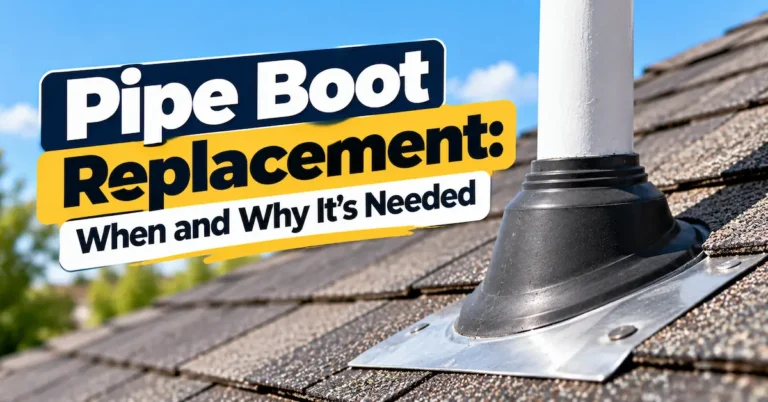
A roof can look perfectly healthy from the driveway and still be leaking through a part that costs very little and gets very little attention. The pipe boot, the small collar that seals around a plumbing vent where it passes through the roof, is one of the most common leak points on a typical home. Pipe boot replacement is usually a quick, targeted job, but it matters because this one component tends to wear out long before the shingles around it do.
Knowing when a boot has reached the end of its life, and what your options are, helps you fix the problem before water reaches the attic and ceiling below.
What Is a Roof Pipe Boot?
A pipe boot is a type of flashing designed for round penetrations. Plumbing vent pipes rise from inside the house and poke through the roof so sewer gases can escape, and each one needs a watertight seal where it exits. The boot has two parts: a flat base, usually metal or plastic, that sits under and over the surrounding shingles, and a flexible collar that wraps snugly around the pipe.
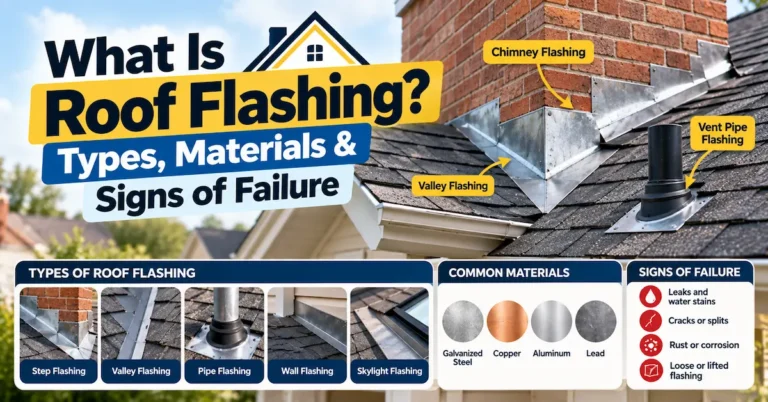
That collar is the weak link. It has to stay flexible enough to hug the pipe through years of heat, cold, and sun, and most standard collars are made of rubber. If you want a broader look at how boots fit into the full set of roof sealing components, our guide “What Is Roof Flashing? Types, Materials & Signs of Failure” covers step flashing, valley flashing, and the other pieces that protect a roof’s seams.
Why Pipe Boots Fail
Standard boots use neoprene or similar synthetic rubber, and rubber breaks down under constant exposure to ultraviolet light and temperature swings. Over the years it dries out, shrinks, and cracks, which opens a gap between the collar and the pipe. Rain then runs down the outside of the pipe and into the house, often without any visible damage to the shingles nearby.
The mismatch in lifespans is the core problem. Standard rubber boots are commonly reported to last somewhere around 10 to 15 years, and often fewer in harsh sun, while architectural asphalt shingles are typically rated for 25 to 30 years. A boot that was installed with the original roof will often fail partway through the roof’s life. In a hot, humid region the wear can come faster, which fits what we described in our post on how Sugar Land’s humid climate affects your roof’s lifespan.
Signs You Need Pipe Boot Replacement
Because boots sit on the roof surface, most warning signs are subtle. Watch for:
- Cracks, splits, or a brittle, chalky look on the rubber collar
- A visible gap between the collar and the pipe
- A collar that has shrunk or pulled away from the pipe wall
- Rust or lifted edges on the metal base
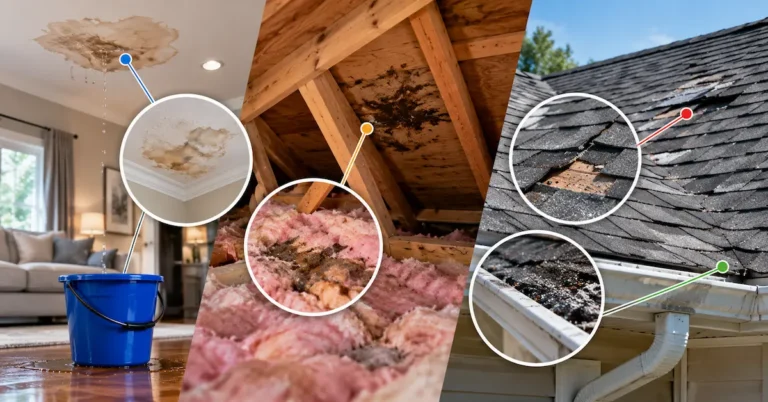
- Water stains on the ceiling near a bathroom, kitchen, or wall that a vent pipe runs through
- Damp insulation or dark staining on the roof deck around the pipe when viewed from the attic
- A boot that is more than 10 years old, even if it looks fine from the ground
Leaks around vents are one of the most frequent items on our list of the common roofing problems in Sugar Land homes, and a failed boot is often the actual source when a homeowner reports a ceiling stain with no obvious roof damage.
Pipe Boot Repair vs Full Replacement
Not every failing boot needs to come out completely. There are two main approaches.
Retrofit collar repair. If the metal or plastic base is still in good shape and only the rubber collar has cracked, a new rubber collar can be installed over the existing flange. This is faster and less disruptive, and it can buy several additional years. It works best as a short to medium term fix on a roof that still has life left.
Full replacement. This means removing the old boot, replacing the base, and weaving the new flashing correctly into the surrounding shingles. It is the better choice when the base is rusted or bent, when the boot has been patched before, or when the roof is aging and you want the repair to last.
Caulk alone is generally a stopgap. Sealant can cover a hairline crack for a while, but it does not restore a failed rubber collar, and it often has to be redone within a season or two.
Pipe Boot Materials and How Long They Last
Replacing a boot is also a chance to choose a more durable one than the original. Common options include:
- Neoprene or EPDM rubber: the most common and least expensive option, with a typical life of roughly 10 to 15 years, sometimes less in strong sun
- Silicone: more resistant to UV and heat, with commonly cited lifespans of around 15 to 20 years or more
- Lead: a soft, formable metal with no rubber to crack, often lasting 30 years or more and frequently outlasting an asphalt shingle roof
- Other all metal designs: durable and long lived, though installation details matter
For a roof that still has many years ahead of it, a longer lasting boot usually costs little extra compared with the labor of replacing a cheap one twice.
How Pipe Boot Replacement Is Done
The process is straightforward when done correctly. A roofer carefully lifts the shingles around the pipe, removes the old boot and its fasteners, and slides the new boot over the pipe. The upper part of the base is tucked beneath the shingles above it, while the lower part sits over the shingles below, so water flows over the flashing instead of behind it. Fasteners are sealed, and the shingles are laid back into place.
Done this way, the repair directs water down and away from the pipe rather than relying on sealant alone. If a leak is already active, a roof leak repair visit can also check the deck and insulation around the vent for hidden water damage before the new boot goes on.
Replace Pipe Boots During a Reroof
If you are planning a roof replacement, replacing the boots should be part of the job, not an afterthought. Old boots are the same age as the roof they were installed with, and putting a new roof over a worn rubber collar is a common way for a fresh roof to start leaking early. Upgrading to a longer lasting boot at that point adds little to the project cost and removes one of the most predictable failure points.
Catching Problems Early
Because boots fail gradually, regular checks make the difference between a minor repair and interior water damage. A professional roof inspection includes a close look at each vent penetration, which is far more reliable than checking from the ground. Checking boots after storm season and again before the next one is a sensible habit for any roof that is more than eight to ten years old.
The Bottom Line
Pipe boots are small, inexpensive parts that protect a large investment, and they are designed to wear out sooner than the roof around them. Recognizing the warning signs, choosing between a collar repair and full pipe boot replacement based on the condition of the base, and upgrading to a more durable material when the opportunity arises will prevent many of the leaks that homeowners never see coming. If your boots are over ten years old or you have noticed a stain near a vent, having them checked is a simple way to rule out an easy fix before it becomes a costly one.
FAQ
How long do roof pipe boots last?
Standard rubber boots are commonly reported to last around 10 to 15 years, sometimes less in intense sun. Silicone boots often last longer, and lead or other metal boots can last 30 years or more.
Can I just caulk around a cracked pipe boot?
Caulk can slow a small leak temporarily, but it is generally a short term fix. A cracked rubber collar usually needs a retrofit collar or a full replacement to seal properly.
Does a leaking pipe boot always mean the whole roof is failing?
No. A failed boot is usually a localized problem, and fixing it often resolves the leak without any other work, provided water has not already damaged the deck or insulation.
How can I tell if a stain on my ceiling is from a pipe boot?
Stains near a plumbing vent line, especially around bathrooms or kitchens, are common signs. A roof inspection that includes the attic is the most reliable way to trace the source.
How much does pipe boot replacement cost?
Cost depends on the boot type, the number of vents, roof pitch and access, and whether any hidden water damage needs repair. The most accurate way to know is to get a quote from a connected local roofing professional after an assessment.