Every region has its own set of roofing challenges, shaped by climate, storm patterns, and the age of homes in the area. In Sugar Land, a handful of issues show up again and again, and most of them trace back to the same root causes: intense summer heat, frequent storm activity, and the humidity that lingers over the Gulf Coast for much of the year.
Knowing what these common roofing problems in Sugar Land actually look like, and why they happen, makes it much easier to catch them early instead of discovering them after they’ve already caused interior damage. Here are the five that come up most often.
1. Shingle Damage From Heat and UV Exposure
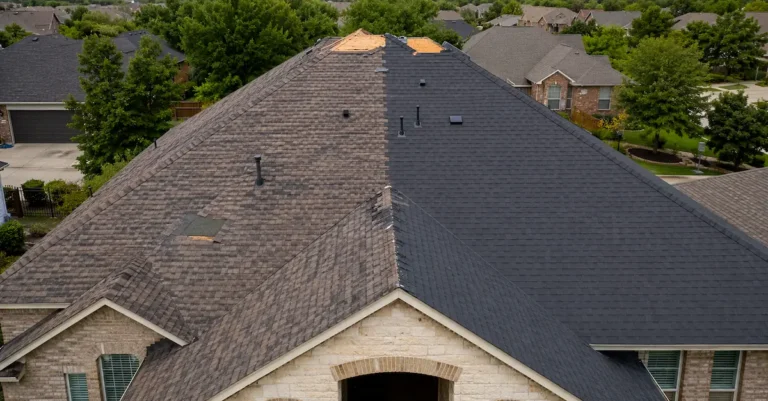
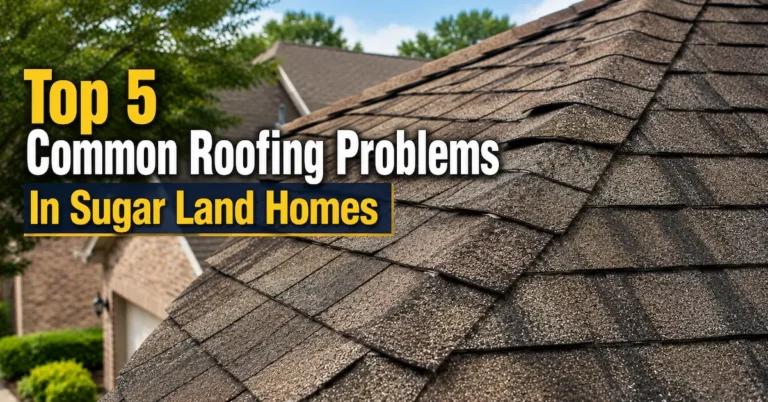
Sugar Land summers put a lot of stress on asphalt shingles. Prolonged, intense sun exposure gradually breaks down the asphalt binders that keep shingles flexible, while surface temperatures on a roof can run significantly hotter than the surrounding air. Over years, this accelerates the natural aging process, leading to shingles that crack, curl at the edges, or lose granules faster than they would in a milder climate.
Granule loss is worth paying particular attention to. Those granules protect the shingle from UV rays, and once a shingle starts shedding them in noticeable amounts, the underlying material is exposed and deteriorates more quickly. Homeowners often notice this first as small colored granules collecting in the gutters after a rain.
2. Hail Damage
Texas sits within a well known hail corridor, and Fort Bend County sees its share of hail producing storms, particularly in spring. Hail damage on asphalt shingles can be surprisingly hard to spot from the ground. It often shows up as small bruises or soft spots rather than obvious holes, which means a roof can carry hail damage for months without an owner realizing it, until a leak develops or an inspection reveals it directly.
This is one of the more deceptive items on this list because the roof can look mostly fine to the untrained eye immediately after a storm. If a hailstorm has passed through the area, it’s worth having a professional take a look even if there’s no visible damage from the yard. A hail damage inspection can identify impact points before they turn into a bigger problem.
3. Roof Leaks From Flashing and Vent Penetrations
Leaks rarely start in the middle of a roof’s open field. They almost always begin at a transition point: chimney flashing, vent boots, skylights, or where two roof planes meet. These areas rely on sealant and metal flashing to stay watertight, and both degrade over time, especially under the combination of heat and humidity that Sugar Land experiences for much of the year.
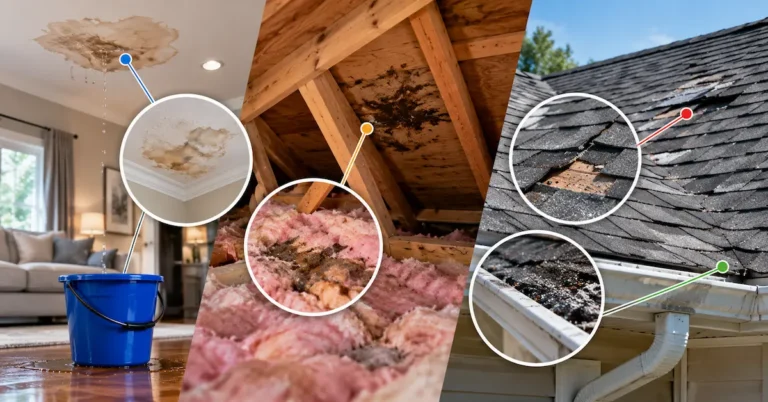
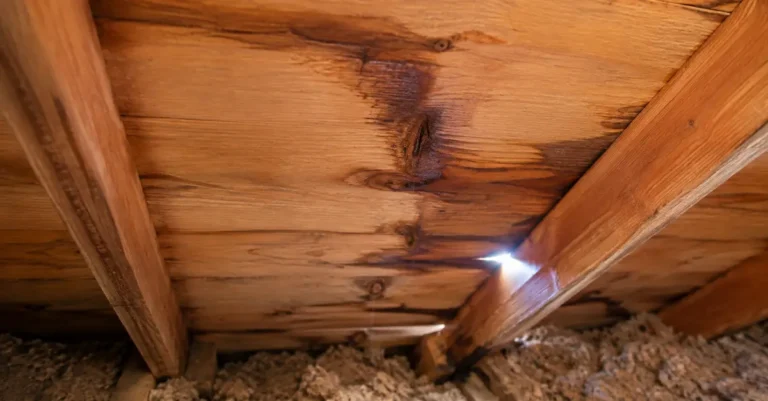
A leak at one of these points can be slow enough that it isn’t obvious right away. Water may travel along the roof deck before it ever shows up as a stain on a ceiling, which means the visible sign of a leak often understates how long the moisture has actually been present. Catching this early through roof leak repair before it spreads to insulation or drywall is far less costly than addressing it after the damage has traveled.
4. Algae and Moss Growth
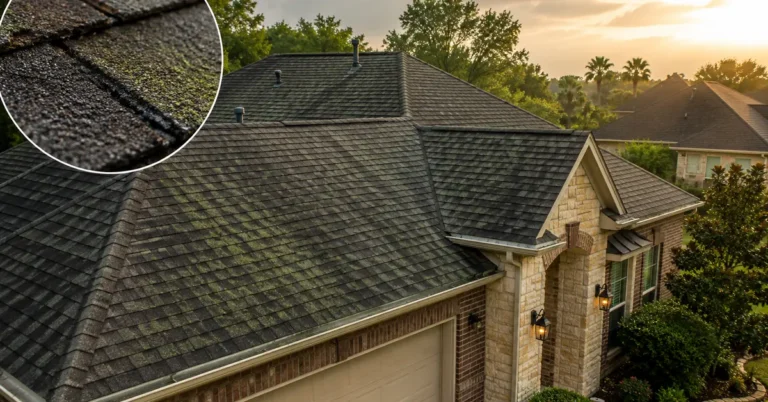
Sugar Land’s humid climate creates favorable conditions for algae streaking and, in shaded or persistently damp areas, moss growth. This is one of the most visually common roofing problems in Sugar Land, showing up as dark streaks running down north facing roof slopes where sunlight doesn’t dry the surface as quickly.
Algae staining is largely a cosmetic issue on its own, but moss is more concerning because it holds moisture directly against the shingle surface, preventing that section of the roof from fully drying between rain events. We covered how this process works in more detail in our post on how Sugar Land’s humid climate affects roof lifespan, which walks through why chronic moisture exposure gradually wears down roofing materials even without a single major storm event.
5. Wind and Storm Related Damage
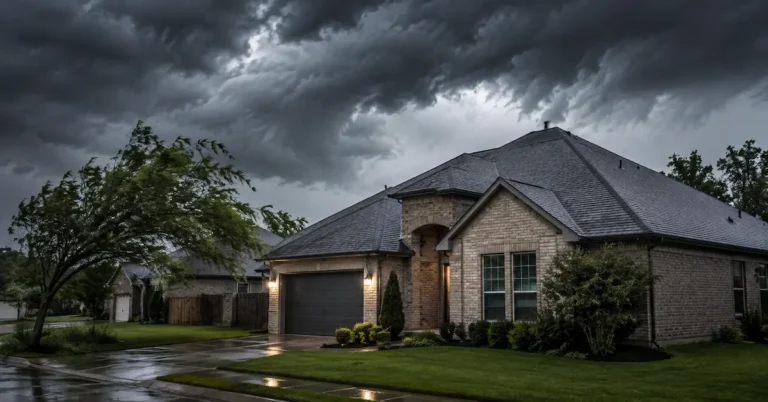
Sugar Land is inland, so it doesn’t experience storm surge, but it isn’t immune to the wind and heavy rainfall that tropical systems and severe thunderstorms bring through the region. Sustained wind can lift shingles that are already loosened by age or heat damage, and heavy rainfall can overwhelm gutters and drainage in a matter of hours during an intense storm.
This is one of the reasons pre season roof preparation matters so much for homeowners here. We go into the specifics of getting a roof storm ready in our guide on preparing your roof for hurricane season, which covers what to check before, during, and after a storm passes through.
Why These Problems Tend to Overlap
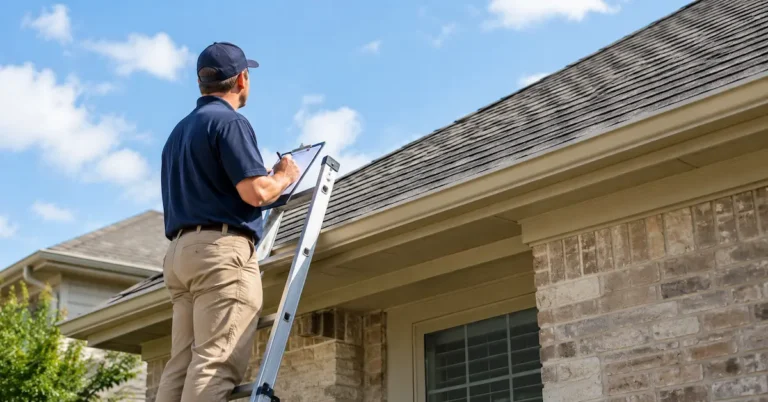
It’s worth noting that these five issues rarely happen in complete isolation. A roof weakened by years of heat and UV exposure is more vulnerable to wind lift during a storm. A roof already dealing with algae and trapped moisture has less structural margin if hail or wind damage occurs on top of it. This is part of why routine inspections matter more in a climate like Sugar Land’s than in a milder one. A professional roof inspection can catch compounding issues before they add up to something more serious.
Signs Homeowners Should Watch For
Across all five of these common roofing problems, a few warning signs tend to repeat:
- Granules collecting in gutters or at the base of downspouts
- Dark streaks or green patches on the shingle surface
- Curling, cracking, or missing shingles
- Water stains on ceilings or in the attic
- Soft or spongy spots when walking on the roof, which typically indicate deck damage
None of these signs guarantee a major problem on their own, but noticing more than one, or seeing the same sign worsen over a season, is a reasonable trigger to have the roof looked at directly rather than waiting.
The Bottom Line
Sugar Land’s combination of intense heat, humidity, hail exposure, and seasonal storms means local roofs face a fuller set of stressors than roofs in many other parts of the country. The good news is that most of these problems are manageable when they’re caught early, and none of them require guesswork to identify. A trained eye can usually tell within a single visit whether a roof is dealing with normal wear or something that needs attention now.
If it’s been a while since your roof was checked, or if you’ve noticed any of the signs above, connecting with a local roofing professional for an assessment is the most reliable next step.
FAQ
How can I tell if my roof has hail damage if I can’t see obvious holes?
Hail damage on asphalt shingles often looks like small bruises, dents, or soft spots rather than visible holes. It’s usually easiest to identify during a close inspection rather than from the ground, especially soon after a hailstorm has passed through the area.
Is algae staining on my roof something I need to worry about?
Algae streaking is mostly cosmetic and doesn’t typically threaten the shingle’s structure on its own. Moss is a bigger concern because it traps moisture against the roof surface over time.
How often should I have my roof checked for these kinds of problems?
Many homeowners in this climate schedule an inspection about twice a year, once before storm season begins and once after it ends, along with a check after any significant storm.
Does home insurance typically cover these kinds of roofing problems?
Coverage depends on the cause and your specific policy. Sudden events like hail or wind damage are more commonly covered than gradual issues like heat related wear or long term algae growth, but it’s worth confirming details directly with your insurer.
How much does it typically cost to repair these common roofing problems?
Cost varies significantly depending on the type of damage, how widespread it is, and the roofing material involved. The most accurate way to know what a specific repair would cost is to have a professional assess the roof directly.