If you’ve ever had a roofer point to a strip of metal around your chimney or a vent pipe and mention flashing, you may have wondered what that piece actually does. So what is roof flashing? It’s a thin material, almost always metal, installed at the seams, joints, and transition points on a roof to direct water away from the areas most likely to leak. Shingles handle the flat, open sections of a roof well on their own, but anywhere the roof plane is interrupted, a chimney, a vent, a skylight, a wall, flashing is what keeps water from working its way underneath.
Understanding what roof flashing is and where it’s used makes it much easier to recognize when it’s failing, since flashing problems are one of the most common sources of roof leaks.
What Is Roof Flashing Used For?
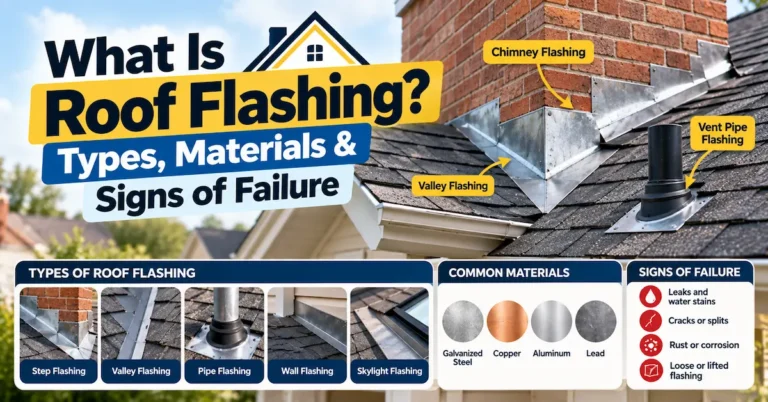
Flashing shows up anywhere a roof surface meets something else, since these transition points can’t rely on overlapping shingles alone to stay watertight. Common locations include:
- Around chimneys
- Along roof valleys, where two roof planes meet
- Around vent pipes and exhaust stacks
- Along the edges of skylights
- Where a roof meets a vertical wall
- Along roof edges and eaves, often called drip edge
Each of these spots handles water differently, which is why several distinct types of flashing exist rather than one universal design.
Common Types of Roof Flashing
Step Flashing
Step flashing consists of small, individual metal pieces installed in layers along a roof to wall junction, such as where a roof meets a dormer or a chimney on a slope. Each piece overlaps the one below it, creating a stepped pattern that channels water down and away from the wall.
Valley Flashing
Valley flashing runs along the internal angle where two roof slopes meet, an area that channels a large volume of water during heavy rain. Because valleys concentrate so much water flow, this flashing needs to be continuous and properly overlapped with the surrounding shingles to hold up over time.
Chimney Flashing
Chimney flashing typically combines step flashing along the sides with a separate piece called counter flashing, which is embedded into the chimney’s mortar joints and folds down over the step flashing. This two part system allows for slight movement between the roof and the chimney without opening a gap for water.
Vent Pipe Flashing
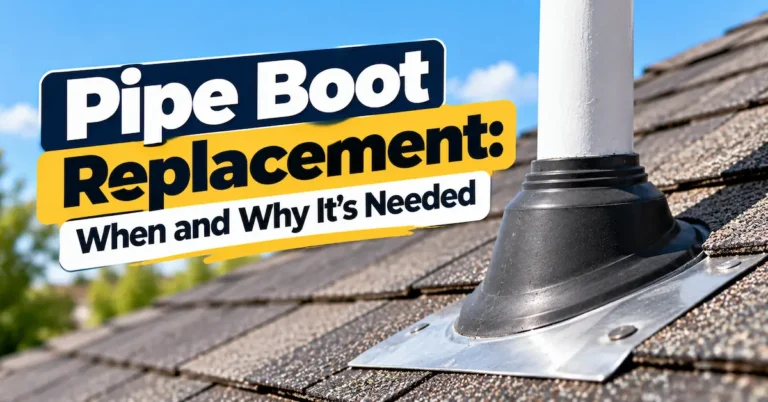
Also called a pipe boot, this type of flashing fits around a plumbing vent pipe where it passes through the roof. It typically includes a rubber or synthetic collar that seals tightly around the pipe, and that collar is one of the more common failure points on an aging roof since rubber degrades with sun exposure faster than the metal base does.
Drip Edge
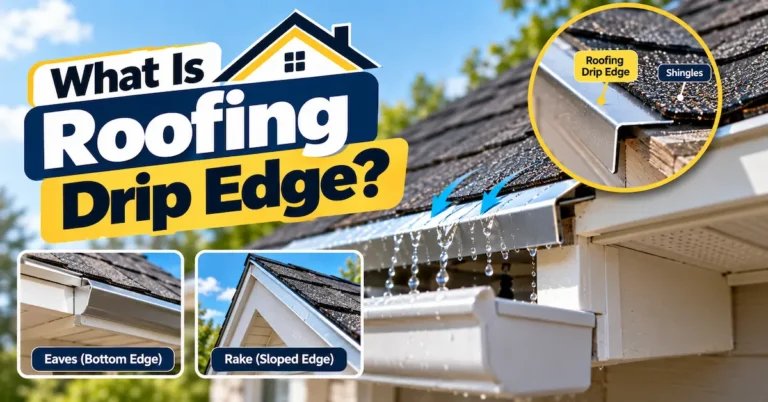
Installed along the eaves and rakes of a roof, drip edge directs water off the roof and away from the fascia and underlying wood, helping prevent water from wicking back underneath the shingles at the roof’s edges.
Counter Flashing
Counter flashing works together with step or base flashing at a masonry surface like a chimney, overlapping it from above to create a second layer of protection against water intrusion.
What Roof Flashing Is Made Of
Roof flashing is most often made from one of the following materials:
- Aluminum, which is lightweight, affordable, and resistant to rust, though it can corrode when in direct contact with certain types of masonry
- Galvanized steel, which is durable and cost effective, though the coating that protects it from rust can wear down over time
- Copper, which is highly durable and resistant to corrosion, often lasting as long as the roof itself, though it comes at a higher cost
- Rubber or synthetic materials, commonly used for pipe boot collars, which are more flexible but also more prone to cracking with age and sun exposure
The right material often depends on the specific application, the roof’s other materials, and the budget for the project.
Signs Your Roof Flashing Is Failing
Flashing doesn’t always show obvious damage before it starts leaking. A few signs are worth watching for:
- Visible rust, cracking, or corrosion on the metal
- Flashing that looks bent, lifted, or separated from the roof surface
- A cracked or brittle rubber collar around a vent pipe
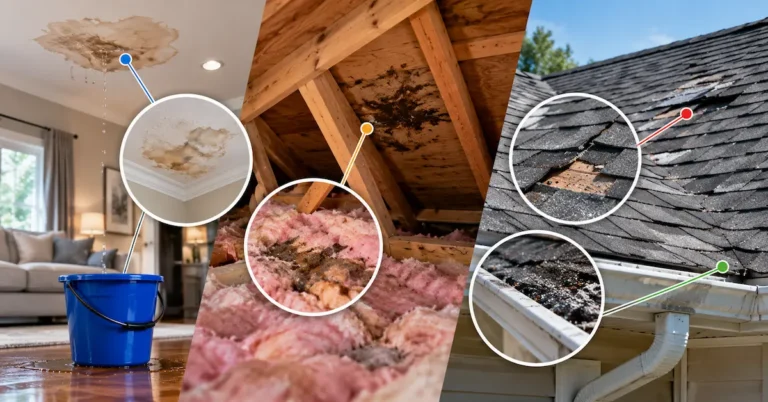
- Water stains on the ceiling or in the attic near a chimney, vent, or skylight
- Gaps where sealant has dried out or pulled away from the flashing
We’ve written in more detail about how these kinds of leaks actually show up inside a home in our guide on what a roof leak looks like, since flashing failures are one of the most frequent causes behind the signs described there.
How Long Does Roof Flashing Last?
Lifespan varies significantly by material. Aluminum and galvanized steel flashing typically last 20 to 30 years, roughly in line with a standard asphalt shingle roof, while copper flashing can last 50 years or more. Rubber pipe boot collars tend to wear out faster than the metal flashing around them, often needing replacement well before the rest of the roof does, particularly in a hot, sunny climate.
This is one of the reasons flashing issues show up so often on the list of common roofing problems in Sugar Land homes, since the combination of intense sun and humidity here tends to age rubber components faster than in milder climates.
Roof Flashing Repair vs Replacement
A small, isolated flashing issue, such as a section that’s come loose or a bit of failed sealant, is often a straightforward repair. Widespread corrosion, flashing that’s separated in multiple areas, or a chimney flashing system that’s failed at both the step and counter flashing level usually points toward full replacement of that section instead. In either case, the surrounding shingles and roof deck should be checked for water damage, since a failed flashing joint often lets moisture in well before it becomes visible from the ground.
If you’re noticing signs of a leak near a chimney, vent, or skylight, roof leak repair that specifically addresses the flashing, rather than just patching the visible symptom, is what actually resolves the problem long term. A professional roof inspection can also identify flashing that’s showing early signs of wear before it leads to an active leak.
The Bottom Line
Roof flashing is a small but essential part of any roof, responsible for protecting exactly the spots where leaks are most likely to start. Knowing what it is, where it’s used, and what it looks like when it starts to fail gives homeowners a real advantage in catching problems early, before they turn into water damage inside the home.
If you suspect flashing on your roof may be failing, having it checked directly is the most reliable way to confirm what’s happening and address it before the next heavy rain finds its way in.
FAQ
What is roof flashing made of?
Most roof flashing is made from aluminum, galvanized steel, or copper, with rubber or synthetic collars used specifically around vent pipes.
How do I know if my roof’s flashing needs to be replaced?
Visible rust, cracking, separation from the roof surface, or a leak appearing near a chimney, vent, or skylight are all signs that flashing should be inspected and likely repaired or replaced.
Is flashing the same thing as a roof leak?
No. Flashing is a component of the roof designed to prevent leaks at vulnerable transition points. A leak is what happens when flashing, or another part of the roof, fails to keep water out.
Can I replace roof flashing without replacing the whole roof?
In most cases, yes. Flashing repair or replacement is typically a targeted job that doesn’t require replacing the surrounding roofing material, unless the surrounding area has also sustained damage.
How much does it cost to repair or replace roof flashing?
Cost depends on the type of flashing, the extent of the damage, and how accessible the area is. The most accurate way to know is to have the specific issue assessed directly.