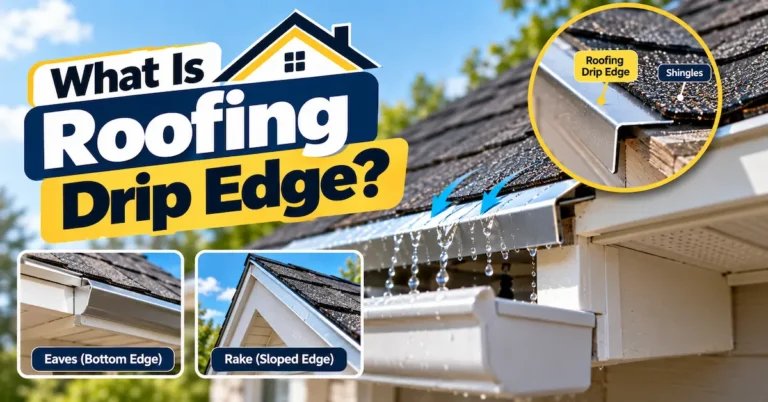
Roofing drip edge is a thin strip of metal installed along the lowest edges of a roof, at the eaves and the sloped side edges called rakes, to direct water off the roof and into the gutters instead of letting it run down behind the fascia. It’s one of the smallest components on a typical roof, and also one of the most commonly missing or improperly installed, despite being required by building code on most homes built or reroofed after 2018.
What Drip Edge Actually Does
Without drip edge, water running off the roof’s edge can wick backward underneath the shingles by capillary action, or drip straight down behind the fascia board and gutter rather than into them. Over time, this leads to rotted fascia, damaged roof decking at the perimeter, and water finding its way into the attic along the eaves. Drip edge solves this with a simple shape: a piece of metal bent to extend slightly past the roofline and angle water outward, so it falls cleanly into the gutter system below.
Drip edge also has a secondary benefit that’s easy to overlook. It seals the small gap between the roof decking and the fascia, which helps keep out birds, insects, and other pests looking for an entry point.
Is Roofing Drip Edge Required by Code?
In most of the United States, yes. The International Residential Code has required drip edge at the eaves and rakes of shingle roofs since its 2018 edition, under section R905.2.8.5. That section specifies that drip edge must be corrosion resistant, at least 0.019 inches thick, extend a minimum of two inches back onto the roof deck, and overlap adjoining sections by at least two inches. Installation location also matters under the code: drip edge goes underneath the underlayment at the eaves and on top of the underlayment along the rakes.
Local jurisdictions can adopt different code versions or add their own amendments, so it’s worth confirming what applies in your specific area rather than assuming national code language covers every situation. Older homes that haven’t been reroofed since code adoption may still lack drip edge entirely, which is one of the more common issues found during a professional roof inspection.
Types of Drip Edge Profiles
Drip edge comes in a few standard shapes, referred to as profiles, each suited to slightly different applications:
Type C, also called the L profile, is the simplest and most affordable option, bent at roughly a 90 degree angle with a lower flange that directs water outward.
Type D, sometimes called the T profile, includes an additional fold that creates a more pronounced hemmed edge, offering slightly more rigidity and a cleaner finished look.
Type F, known as an extended leading edge profile, has a longer lower flange and is often used when installing drip edge over an existing layer of shingles, such as during certain reroofing projects.
None of these profiles differ dramatically in how well they perform their core job. The choice usually comes down to local convention, installer preference, and how the drip edge will look alongside the rest of the roofline.
Drip Edge Materials
Most drip edge is made from one of these materials:
- Aluminum, the most common choice, lightweight, affordable, and resistant to rust
- Galvanized steel, more rigid and better suited to withstanding strong wind, though the protective coating can wear over time
- Copper, a premium option that develops a natural patina and can last as long as the roof itself, at a significantly higher cost
- Vinyl, occasionally used on lower budget projects, though less durable than metal options over the long term
In a region that sees both intense heat and heavy storm activity, galvanized steel or a heavier gauge aluminum tends to hold up more consistently than lighter materials, since wind uplift is a real factor at the roof’s edges during severe weather.
Drip Edge vs Other Types of Flashing
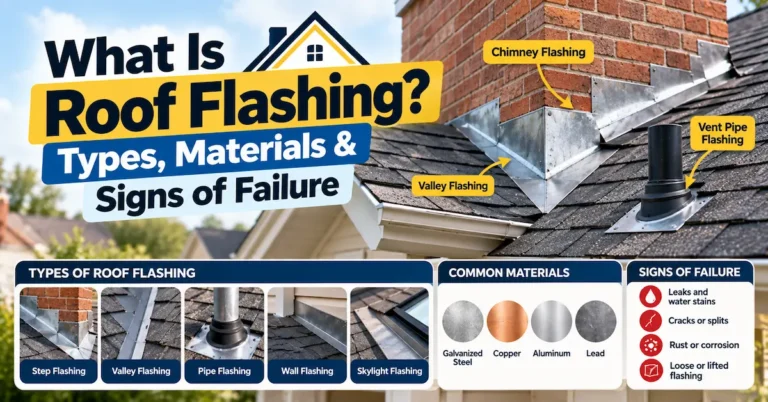
Drip edge is technically a type of flashing, just installed in a specific location and shape. We cover the broader category, including step flashing, valley flashing, and chimney flashing, in our guide on what roof flashing is, which explains how drip edge fits into the larger system of components that keep water out of a roof at its various seams and transitions.
Signs Your Drip Edge Needs Attention
A few signs suggest drip edge should be inspected or repaired:
- Visible rust, bending, or separation from the roofline
- Water stains or rot on the fascia board directly beneath the roof edge
- Gutters that seem to be missing water that’s clearly coming off the roof
- Missing drip edge altogether, most common on older homes that haven’t been reroofed recently
- Nesting or pest activity near the roof edge, which can indicate a gap where drip edge has failed or was never installed
Because drip edge sits at the perimeter of the roof, damage here is often easier to spot from the ground than flashing issues higher up on the roof surface, though a closer look during routine roof maintenance is still the most reliable way to catch smaller issues before they lead to fascia rot.
Why This Matters More Heading Into Storm Season
Roofing drip edge plays a meaningful role in how well a roof edge holds up against wind driven rain, which is exactly the kind of stress Gulf Coast homes face during the more active months of the year. We go into broader storm preparation steps in our guide on preparing your roof for hurricane season, and confirming that drip edge is properly installed and in good condition is a worthwhile addition to that seasonal checklist, particularly since it’s inexpensive to correct compared to the water damage a missing or failed section can eventually cause.
The Bottom Line
Drip edge is a small, inexpensive component that does an outsized amount of work protecting a roof’s most vulnerable edges. It’s required by code on most homes for good reason, and a missing or damaged section is one of the more overlooked issues on an aging roof. If you’re not sure whether your roof has proper drip edge, or whether what’s there is still doing its job, having it checked as part of a broader roof assessment is a simple way to rule out one more source of hidden water damage.
FAQ
Does every roof need drip edge?
Most jurisdictions in the United States have required it on shingle roofs since the 2018 International Residential Code, though local amendments vary. Older roofs that haven’t been reroofed since then may not have it.
Can drip edge be added to an existing roof without a full reroof?
In some cases, yes, particularly at accessible edges, though a proper retrofit typically involves carefully lifting the existing edge shingles to install it correctly rather than simply nailing it on top.
What’s the difference between drip edge and gutter apron?
The terms are sometimes used interchangeably, though gutter apron specifically refers to drip edge installed at the eaves where gutters are present, designed with a slightly different profile to direct water precisely into the gutter channel.
How long does drip edge typically last?
Metal drip edge often lasts several decades with minimal maintenance, though its lifespan can be shortened by physical damage, severe corrosion, or being installed with an incompatible material against certain types of masonry or metal roofing.
How much does it cost to repair or install roofing drip edge?
Cost depends on the length of roofline involved, the material chosen, and whether it’s part of a larger reroofing project. The most accurate way to know is to have it assessed directly as part of a roof inspection.