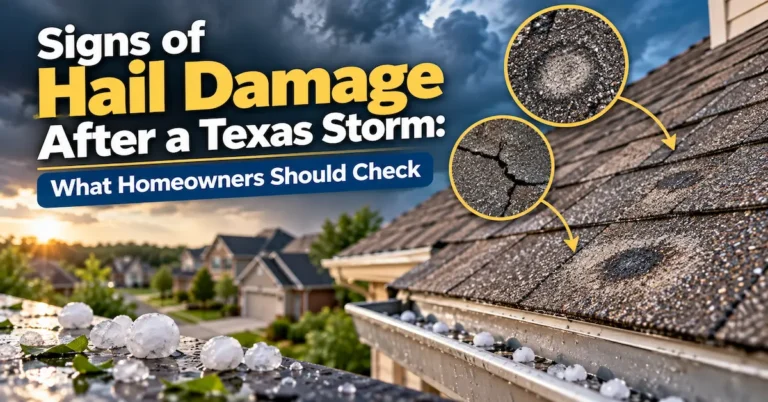
A hailstorm can be over in ten minutes and still leave a roof compromised for years. The tricky part is that the damage often doesn’t look like much from the driveway. There’s rarely a hole or a missing section. Instead, hail tends to bruise shingles, knock off protective granules, and crack the material underneath, and the leaks that result may not appear until months later.
Knowing the signs of hail damage, and where to look for them, helps you decide quickly whether your roof needs a professional assessment. It also helps you gather the documentation you’ll want if an insurance claim ends up being part of the picture.
Why Hail Damage Is Easy to Miss
Asphalt shingles are designed to shed water and block UV rays with a surface layer of granules. When a hailstone hits hard enough, it can crush those granules and bruise the asphalt mat beneath them. From the ground, that bruise can look like nothing at all. Over time, though, the exposed area wears faster, the mat can crack, and water finds its way in.
Size matters, but it isn’t the whole story. Industry testing, including work by Haag Engineering, points to roughly one inch to one and a quarter inches as the general range where hail starts causing functional damage to asphalt shingles, depending on the shingle type. Older, more brittle shingles can be damaged by smaller stones, and research from the Insurance Institute for Business and Home Safety has found that repeated smaller hail can wear down shingles over time. In other words, a storm that barely marks a newer roof can do real harm to one that’s already aging.
Signs of Hail Damage on the Roof Surface
If you or a professional can safely see the roof up close, these are the most common indicators on asphalt shingles:
- Bruises or soft spots. These feel slightly spongy when pressed and may look like small dark, dented circles.
- Granule loss. Bare, dark patches where the colored granules have been knocked away, often with a scattering of granules collected in gutters or at the base of downspouts.
- Random impact marks. Hail damage is typically scattered across the surface rather than concentrated along edges, which helps distinguish it from wind damage.
- Cracked or fractured shingles. In more severe storms, the mat itself can crack, sometimes with exposed fiberglass.
- Damaged ridge caps. These sit high on the roof and often take direct hits.
Damage on a roof can be difficult to tell apart from ordinary age related wear, which is why an experienced eye matters. If you’re seeing granule loss and cracking and aren’t sure whether it’s from the storm or simply the roof’s age, our overview of the common roofing problems in Sugar Land homes walks through how hail compares to other typical causes of shingle wear.
Signs of Hail Damage Around the Rest of the Property
Some of the easiest evidence to spot isn’t on the shingles at all. Soft metal surfaces show hail impact more clearly, and they’re useful for confirming that a storm actually reached your property with damaging force. Check for:
- Dents in gutters, downspouts, and roof vents
- Dimples or dings on the metal fins of an outdoor AC unit
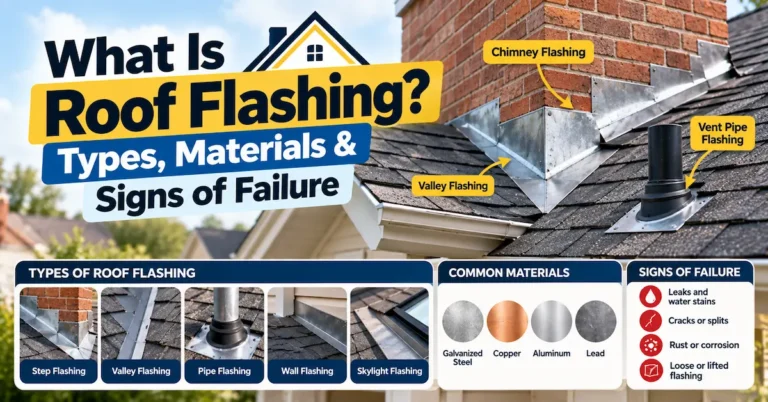
- Dents in metal flashing or chimney caps
- Chipped paint or pitting on garage doors, siding, and window screens
- Damage to fences, patio furniture, or outdoor grills
If you find dents on several of these items, that’s a strong hint the roof was hit too, even if the shingles look fine at first glance.
Signs Inside the House
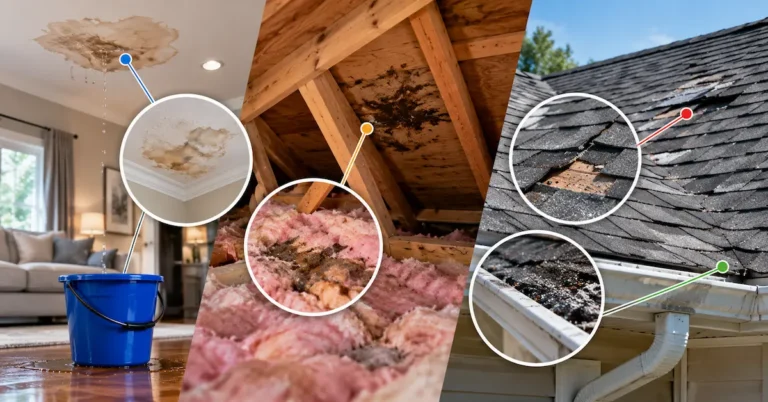
Interior signs usually mean water has already made it past the damaged area. These include new ceiling stains, damp or discolored attic insulation, and dark spots on the underside of the roof deck. If you notice any of these after a storm, our guide on what a roof leak looks like covers how to recognize them in the ceiling, the attic, and on the roof itself.
What to Do After a Hailstorm
A few steps in the days following a storm can protect both your roof and any potential claim:
- Walk the property from the ground. Look at the roof, gutters, and outdoor metal surfaces. Don’t climb onto a wet or possibly damaged roof yourself.
- Take dated photos. Capture dents, granule loss, and any visible damage before anything is cleaned up or repaired.
- Save weather information. Note the date of the storm and, if possible, the reported hail size for your area.
- Check your attic if it’s safe to do so, looking for stains, damp insulation, or daylight.
- Review your insurance policy for filing deadlines and any separate wind and hail deductible, since policies vary and deadlines can be shorter than people expect.
- Schedule a professional assessment before hiring anyone to repair the roof or signing any paperwork.
A documented roof inspection in Sugar Land gives you an independent record of the roof’s condition, which is useful whether you decide to repair, replace, or file a claim.
Be Careful Who You Hire After a Storm
Right after a hailstorm, it’s common for unfamiliar contractors to appear in a neighborhood offering quick inspections and fast turnarounds. Some are legitimate. Others are storm chasers who leave once the insurance money has moved. Texas has also created a new state reroofing license, and we explain how it works in our post on Texas’s new roofing license law, including how homeowners can verify a contractor’s status.
Two additional cautions are worth repeating. Never sign a contract under pressure right after a storm, and be wary of anyone who offers to waive or absorb your insurance deductible, since that is illegal in Texas.
Repair or Replacement?
Whether hail damage calls for a repair or a full replacement depends on how widespread it is, how old the roof is, and whether the underlying mat has been compromised. A few damaged shingles on an otherwise healthy roof are usually a repair. Damage spread across most slopes, especially on an older roof, often points toward replacement. A local professional can assess this for your specific roof, and hail damage roof repair in Sugar Land is the natural next step once an inspection confirms what the storm actually did.
The Bottom Line
After a Texas hailstorm, the roof can look intact while the shingles have already been compromised. Checking the roof surface, the gutters, and soft metal around the property gives you a realistic picture of what the storm did, and a documented professional assessment turns that picture into something you can act on. The sooner it’s done, the less time moisture has to work its way in.
FAQ
How soon after a hailstorm should I have my roof checked?
As soon as it’s safe. Hail damage can be invisible from the ground, and waiting gives water more time to reach the roof deck. Insurance policies also carry filing deadlines, so acting promptly protects your options.
Can hail damage a roof without leaving visible holes?
Yes. The most common damage is bruising and granule loss, which don’t create openings right away but shorten the shingle’s life and can lead to leaks later.
How can I tell hail damage from wind damage?
Hail damage typically appears as random impact points across the surface, while wind damage tends to affect edges, corners, and ridges, often as lifted, creased, or missing shingles.
Does homeowners insurance cover hail damage in Texas?
Many policies do, but coverage, deductibles, and filing deadlines vary. Reviewing your own policy or speaking with your insurer is the only way to know what applies to you.
What affects the cost of repairing hail damage?
The size of the affected area, the roofing material, the roof’s age and condition, and whether the deck underneath was compromised all play a part. A connected local professional can assess the roof and explain what applies to your situation.