By the time most homeowners notice an obvious leak, water has usually already been getting into the roof structure for a while. A dripping ceiling or a visible wet spot is the roof telling you a problem has been developing for some time, not the moment it actually started. Learning how to spot a roof leak while it’s still small is what separates a minor repair from a much larger one involving insulation, drywall, or even structural wood.
In Sugar Land, this matters more than in drier climates. We’ve written before about how the area’s humid climate affects roof lifespan, and that same moisture means a small leak here has less chance to dry out between rain events than it would somewhere arid. The earlier a leak is caught, the less time it has to spread.
Why Roof Leaks Are Often Missed at First
Water doesn’t necessarily fall straight down from where it enters the roof. It often travels along the underside of the roof deck, following rafters or sheathing seams, before it finally drips somewhere lower or shows up as a stain. That means the wet spot on your ceiling might be several feet away from where the actual leak started, which makes leaks tricky to trace without getting into the attic directly.
This is also why leaks connected to flashing and vent penetrations, one of the most common roofing problems in Sugar Land homes, can go unnoticed for a long time. The entry point is small and often hidden, while the visible sign shows up somewhere else entirely.
Signs Inside the House
Ceiling Stains
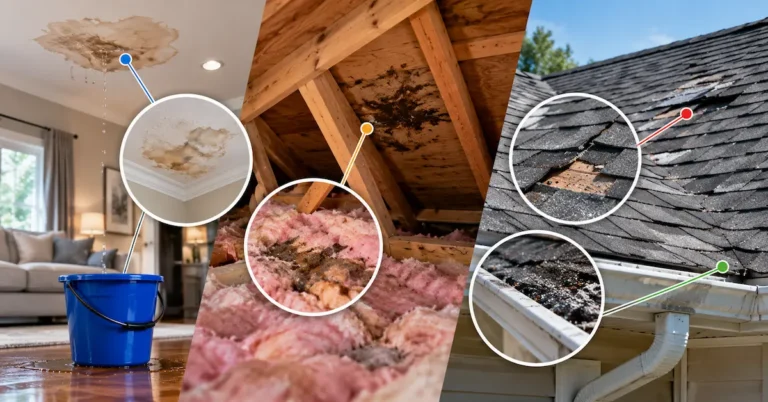
Yellowish or brownish stains on a ceiling, even faint ones, are one of the clearest indicators of water intrusion. They don’t have to be large or actively dripping to indicate a real problem. A stain that isn’t growing might mean a slow, intermittent leak rather than an active one, but it still needs attention.
Peeling Paint or Bubbling Drywall
Moisture trapped behind paint or drywall causes it to bubble, peel, or feel soft to the touch. This typically means water has been present long enough to compromise the material itself, not just pass through briefly.
Musty Odors
A persistent musty smell, particularly in an upstairs room or near the ceiling, often points to trapped moisture and the early stages of mold growth, even before any visible staining appears.
Sagging Ceiling Areas
A ceiling that looks slightly uneven or sags in one section usually indicates water has been accumulating in the insulation or drywall above it for some time. This is a more advanced sign and generally means the leak has been present longer than the other indicators on this list.
Signs in the Attic
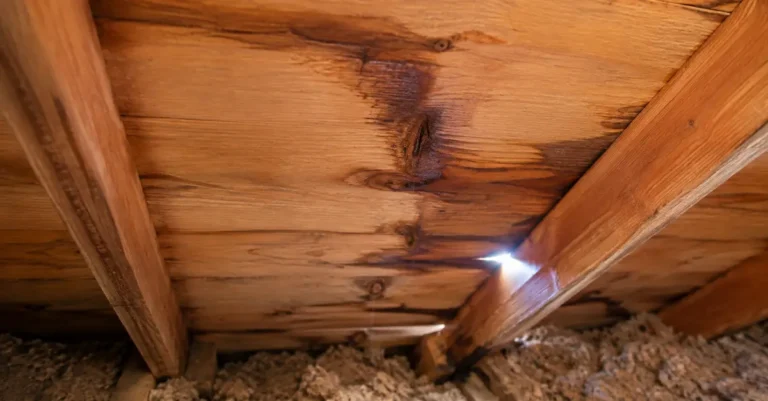
If you’re comfortable doing so safely, checking the attic directly is one of the most effective ways to spot a roof leak before it reaches the living space below.
- Dark spots or streaking on the underside of the roof deck, which often indicate water has been tracking along the wood
- Visible daylight coming through the roof boards, which points to a gap or damaged section
- Damp or discolored insulation, since wet insulation loses much of its effectiveness and is a strong indicator of an active leak
- Rusted nail heads or fasteners, which suggests condensation or moisture exposure over time
- Mold or mildew growth on wood framing, which typically develops after sustained moisture exposure rather than a single rain event
Signs on the Roof Itself
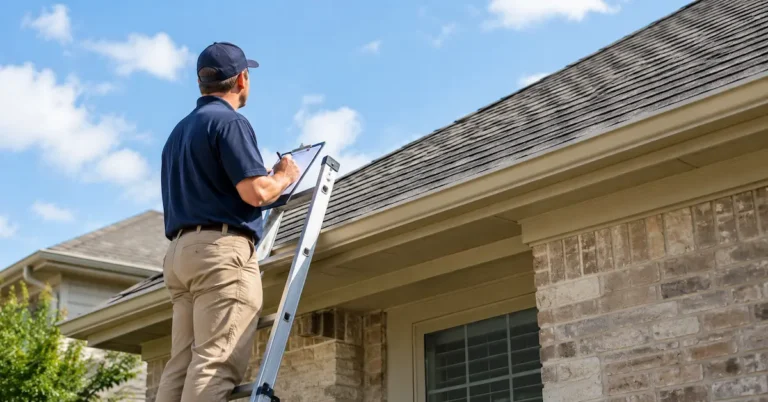
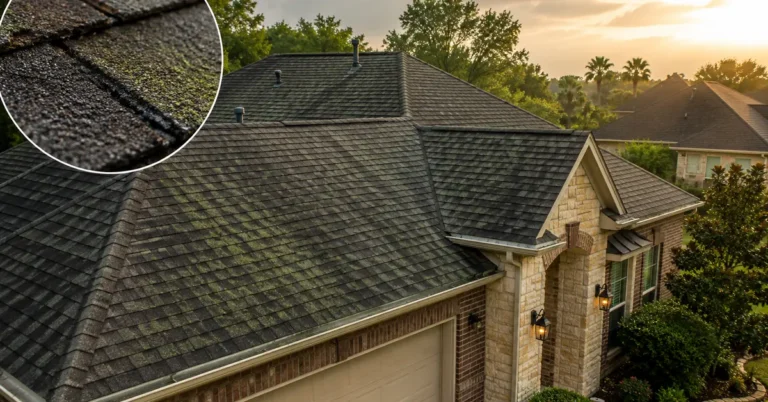
From the ground or with a pair of binoculars, a few visual cues on the roof surface can point to a developing leak risk before water actually gets inside:
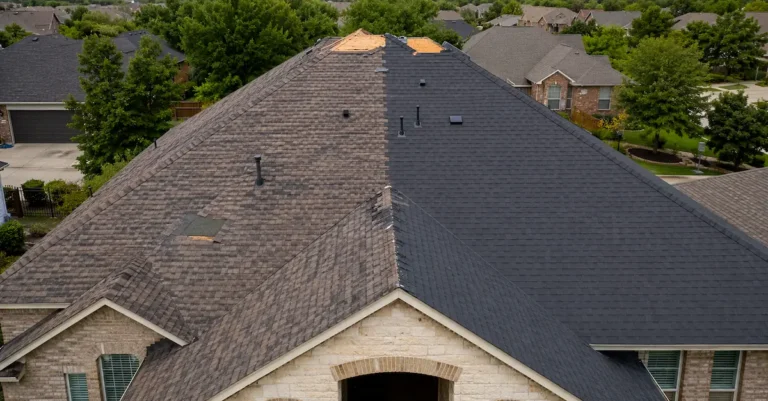
- Curling, cracked, or missing shingles
- Damaged or lifted flashing around chimneys, vents, or skylights
- Cracked or deteriorated pipe boots around plumbing vents
- Granules collecting heavily in gutters, which indicates shingle wear in that area
- Visible gaps where two roof sections meet
Any of these on their own don’t guarantee an active leak, but they mark the specific spots most likely to develop one.
When a Leak Is Connected to a Storm
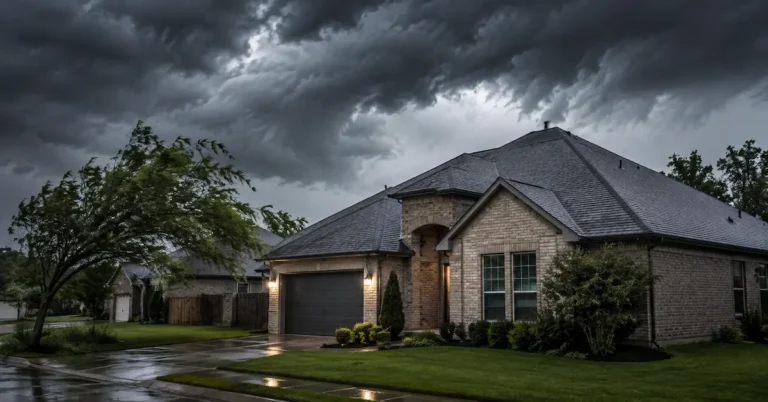
Leaks that appear suddenly after a storm are usually easier to trace than gradual ones, since they typically correspond to a specific point of wind or hail impact. We covered what to check for after severe weather in our guide on preparing your roof for hurricane season, including the post storm inspection points that often reveal exactly where a new leak originated.
If a leak shows up right after a significant storm, it’s worth treating it as a priority rather than waiting to see if it resolves on its own, since wind driven rain can force water past shingles that otherwise look intact.
What to Do Once You Spot a Possible Leak
Once you notice any of the signs above, a few steps help limit the damage while you arrange a repair:
- Place a container under any active dripping to protect flooring and furniture
- Note the location relative to fixed points in the room, since this helps a roofer trace the leak’s likely origin
- Take photos of staining or damage for your own records and for any potential insurance claim
- Avoid ignoring a slow or intermittent leak simply because it isn’t actively dripping at the moment you check
From there, a professional roof leak repair can identify the actual entry point, which is often not directly above the visible damage, and address it before the affected area grows.
Why DIY Leak Tracing Is Often Unreliable
It’s tempting to try to find a leak’s source by inspecting the roof surface directly above where the ceiling stain appears, but this frequently leads to missing the actual entry point. Because water travels before it drips, a leak traced this way often results in a repair in the wrong spot, while the real source continues letting water in. A trained eye checking both the attic and the roof surface together has a much better chance of finding the actual cause the first time.
The Bottom Line
Learning to spot a roof leak early comes down to paying attention to a combination of subtle signs, a faint stain, a slightly damp smell, a section of shingles that looks a little rougher than the rest, rather than waiting for something obvious. In a climate like Sugar Land’s, where humidity gives moisture more time to sit and do damage, catching these early signs makes a meaningful difference in how much repair is eventually needed.
If you’re noticing any of the signs described here, having your roof and attic checked directly is the most reliable way to confirm what’s actually happening before it grows into a larger issue.
FAQ
Can a roof leak exist without any visible ceiling stain?
Yes. Water can be trapped in insulation or attic framing for a while before it ever shows up as a stain on the ceiling below, which is why checking the attic directly can reveal a leak earlier than waiting for visible signs inside the living space.
Is a musty smell always a sign of a roof leak?
Not always, but a persistent musty odor, especially near the ceiling or in an upstairs room, is common enough with hidden moisture that it’s worth investigating rather than dismissing.
How quickly should I address a leak once I notice it?
Sooner is better in nearly every case. Even a slow leak gives mold and structural damage more time to develop the longer it goes unaddressed, particularly in a humid climate where materials take longer to dry out.
Can I find the source of a leak myself by looking at the roof?
It’s possible for very obvious damage, but because water often travels before it drips down, a leak’s visible sign inside the house doesn’t always line up with its actual entry point on the roof. A professional inspection that checks both the attic and the roof surface is more reliable.
How much does it cost to repair a roof leak?
Cost depends on the size and location of the leak and how much secondary damage, if any, has occurred to insulation or drywall. The most accurate way to know is to have the leak assessed directly.