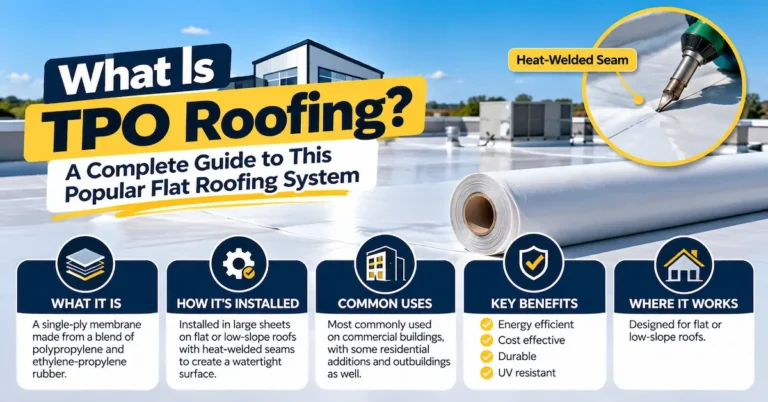
So what is TPO roofing? TPO stands for thermoplastic polyolefin, and it’s a single-ply roofing membrane made from a blend of polypropylene and ethylene-propylene rubber. It’s installed in large sheets on flat or low-slope roofs, most commonly on commercial buildings, though it shows up on some residential additions and outbuildings as well. The seams between sheets are heat-welded together, which creates a continuous, watertight surface rather than relying on overlapping layers the way shingle roofing does.
TPO has become one of the most widely used flat roofing materials over the past two decades, largely because it balances energy efficiency, cost, and durability better than many of the alternatives it replaced.
How TPO Roofing Works
Unlike a shingle roof, which sheds water off a sloped surface, a flat or low-slope roof needs a continuous waterproof membrane since there’s little pitch to help water run off. TPO membranes are manufactured in large rolls, typically 4 to 12 feet wide, and rolled out across the roof deck before being mechanically fastened or adhered. The seams where sheets meet are then heat-welded, essentially melting the material together into a single, monolithic barrier rather than leaving a seam that relies on adhesive or tape alone.
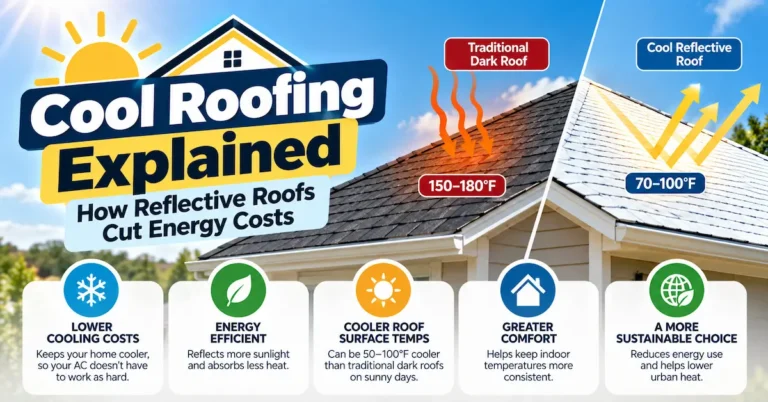
Most TPO membranes are white, though tan and gray options exist. White is by far the most common choice because it reflects sunlight rather than absorbing it, which helps reduce the amount of heat that transfers into the building below.
TPO Roofing Thickness and What It Means for Durability
TPO membranes typically come in 45, 60, and 80 mil thicknesses, with some premium products available at 90 mil. Thicker membranes generally hold up better to foot traffic, punctures, and general wear, which is why commercial installations often specify 60 mil or thicker.
That said, thickness isn’t the only factor that determines how long a TPO roof lasts. Manufacturer quality and formulation matter just as much, and a well made 60 mil membrane can outperform a poorly formulated 80 mil one. This is worth keeping in mind if you’re comparing quotes that emphasize thickness alone without discussing the specific product or manufacturer being used.
How Long Does TPO Roofing Last?
TPO roofing typically lasts 15 to 25 years, with some premium systems backed by 25 to 30 year manufacturer warranties when installed with thicker membranes and proper detailing. Real world lifespan depends heavily on installation quality, membrane thickness, climate exposure, and how consistently the roof is maintained.
In a hot, sunny climate, TPO’s reflective white surface is a genuine advantage for reducing cooling costs, but that same climate also means the membrane needs periodic cleaning, generally every two to three years, to maintain its reflectivity. A dirty membrane doesn’t fail outright, but it does lose some of the energy efficiency benefit that makes TPO appealing in the first place.
TPO Roofing vs EPDM and PVC
TPO is one of three main single-ply membrane options, alongside EPDM and PVC, and each has different strengths.
EPDM, a synthetic rubber membrane, is generally more flexible and more puncture resistant than TPO, and it has a long track record in the industry. It’s typically black, which absorbs more heat than TPO’s white surface, making it a less ideal choice specifically for hot climate cooling performance.
PVC membranes share some similarities with TPO in appearance and installation method, but PVC generally carries a higher cost while offering strong chemical resistance, which matters more for certain industrial applications than for typical commercial or residential use.
TPO sits in between on cost, offers strong reflectivity for hot climates, and has become the more commonly specified option for that reason, though it’s historically been somewhat more prone to seam and puncture issues than EPDM, particularly with lower thickness membranes or less experienced installation crews.
Is TPO Roofing a Good Fit for Sugar Land’s Climate?
For flat or low-slope sections common on commercial buildings and some larger residential properties in this area, TPO’s reflective surface is a real advantage against the region’s intense summer heat. The tradeoff is that TPO membranes can become more susceptible to installation related issues if the crew isn’t experienced with the material’s specific welding requirements, since TPO is stiffer and less forgiving at corners and penetrations than EPDM.
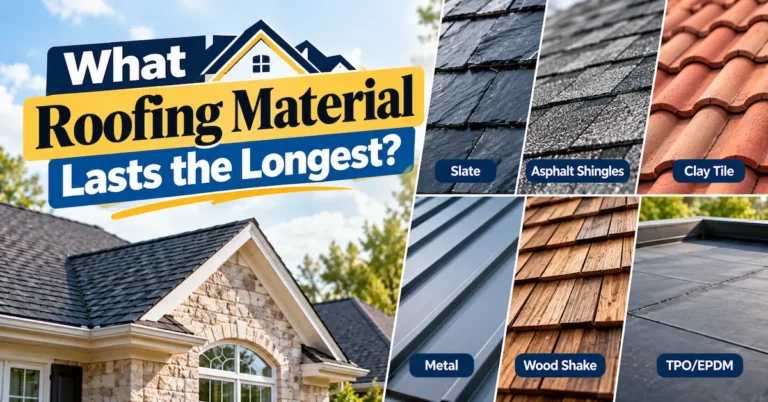
We’ve discussed how different roofing materials generally compare on longevity in our broader guide on what roofing material lasts the longest, which covers TPO alongside asphalt, metal, and tile for a fuller picture of how flat roofing membranes stack up against sloped roofing materials.
Common TPO Roofing Problems to Watch For
A few issues tend to come up more often with TPO than with other roofing systems:
- Seam failure, particularly on older or lower quality installations where the heat welding wasn’t done thoroughly
- Punctures, since TPO is less puncture resistant than EPDM and can be damaged by dropped tools or rooftop equipment
- Shrinkage or warping, which can develop over time from repeated thermal cycling and put stress on seams
- Reduced reflectivity from dirt buildup, which is a maintenance issue rather than a structural one, but still worth addressing
Routine inspection is the most reliable way to catch these issues early, since a small seam separation is a simple repair while a widespread failure across multiple seams often points toward a larger recover or replacement project.
Choosing a TPO Roofing Installer
Because TPO’s performance depends so heavily on proper heat welding and detailing at penetrations and corners, installer experience with this specific material matters more than it might for a simpler roofing system. A commercial roofing contractor familiar with TPO systems specifically, rather than general roofing experience alone, is worth prioritizing for a project of this kind.
The Bottom Line
To sum up what is TPO roofing in practical terms: it’s a widely used, cost effective option for flat and low-slope roofs, offering strong energy efficiency through its reflective white surface. It typically lasts 15 to 25 years, with premium systems reaching closer to 30 years under ideal conditions, though real world performance depends heavily on installation quality and ongoing maintenance. For buildings in hot climates with significant flat roof area, TPO remains one of the more practical choices available, provided it’s installed by a crew experienced with the material.
FAQ
What is TPO roofing made of?
TPO is made from a blend of polypropylene and ethylene-propylene rubber, formed into a single-ply membrane that’s heat-welded at the seams during installation.
Is TPO roofing better than EPDM?
Neither is universally better. TPO offers stronger reflectivity and energy efficiency in hot climates, while EPDM is generally more puncture resistant and flexible. The right choice depends on the building’s specific needs and climate.
Can TPO roofing be used on a residential home?
Yes, though it’s most common on flat or low-slope sections of a home, such as an addition or a porch roof, rather than the main sloped roof area.
How often does a TPO roof need maintenance?
Cleaning every two to three years helps maintain the membrane’s reflectivity, and periodic inspections can catch seam or puncture issues before they lead to leaks.
How much does a TPO roof cost?
Cost depends on the roof’s size, the membrane thickness chosen, and the specific manufacturer and warranty selected. The most accurate way to know is to get a quote after a professional assessment of the roof.