Finding the right roofing company in Sugar Land, TX isn’t just about picking whoever shows up first in a search result or knocks on your door after a storm. Roofing work is expensive to redo and difficult to inspect once it’s finished, which means the decision of who does the work matters more than most home service hires.
Sugar Land’s climate adds a few local considerations that don’t apply everywhere. Between heat and humidity wearing down materials year round and storm season bringing wind, hail, and heavy rain, homeowners benefit from working with a roofer in Sugar Land who understands how those conditions affect roofs in this specific area, not just general roofing knowledge.
Here’s what actually matters when evaluating a roofing company near Sugar Land, and a few things worth being cautious about.
Licensing, Insurance, and Local Presence
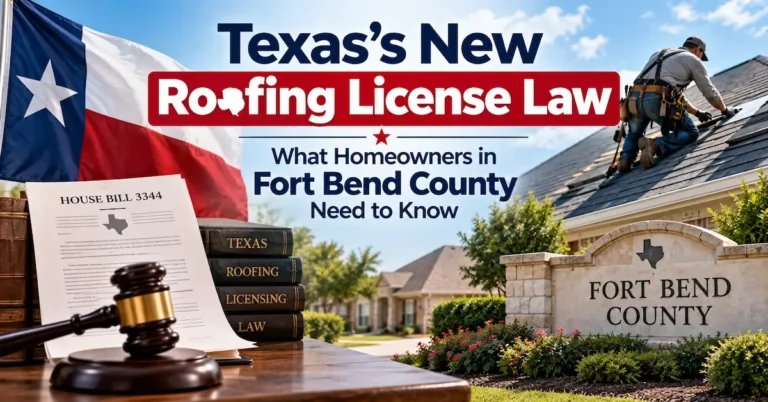
Texas doesn’t require a statewide roofing license the way some states do, which makes it especially important for homeowners to verify other aspects of a contractor’s qualifications.
You can also learn more about how to choose a licensed and insured roofer in Fort Bend County before hiring a contractor.
- General liability insurance, so you’re not financially exposed if something goes wrong on your property during the job.
- Workers’ compensation coverage for the crew doing the work, where applicable.
- A verifiable local presence, meaning an actual business address or service history in the Fort Bend County area, not just a phone number and a truck.
- Written estimates and contracts that clearly explain the proposed work.
Storm-chasing crews that appear in a region right after a major weather event and disappear once the work dries up are a known concern across storm-affected areas. A company with an established local presence and a track record in the area may be easier to evaluate and follow up with than one that only appears when storm damage claims increase.
Local Storm and Climate Experience
Sugar Land homeowners may also encounter several recurring roofing issues. Our guide to common roofing problems in Sugar Land homes explains some of the problems homeowners should watch for.
Because Sugar Land deals with a specific combination of heat, humidity, and seasonal storm activity, experience with those conditions matters more here than generic roofing knowledge.
A roofing company that regularly works in Sugar Land and the surrounding Fort Bend County area should be familiar with issues such as:
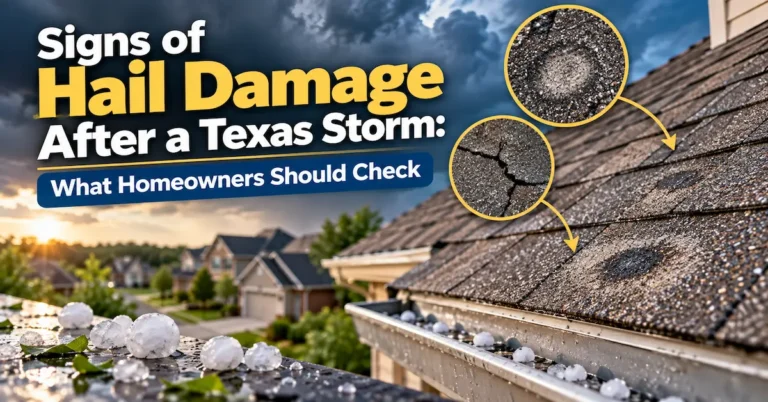
- Hail damage
- Wind related shingle damage
- Heavy rainfall
- Roof leaks
- Heat-related material deterioration
- Storm-related roof damage
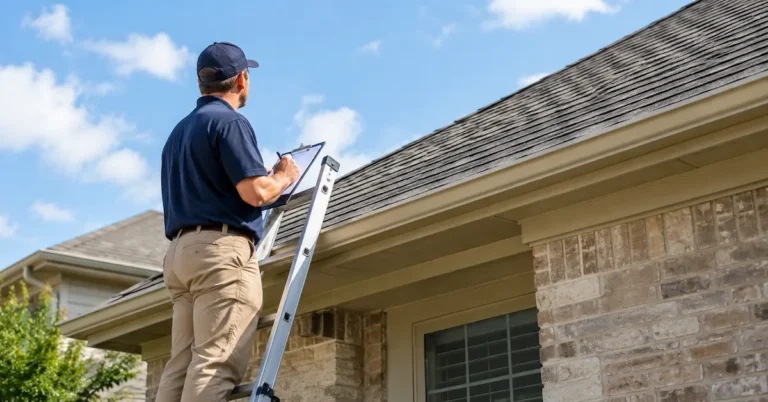
A local roofing professional should also be able to explain how they inspect storm damage and document the physical condition of your roof.
If you’re dealing with storm damage, remember that a roofing contractor can provide an estimate and document physical damage, while your insurance company or licensed insurance professional handles coverage and claim decisions.
Written Estimates and Clear Scope of Work
A trustworthy roofing company will inspect the roof, document what they find, and put the scope of work in writing before any work begins.
Vague verbal estimates or pressure to sign on the spot are common warning signs. It’s reasonable to request a written breakdown of materials, labor, and timeline, and to compare that against at least one other estimate if you’re not already familiar with the company.
Your written estimate should make it clear:
- What work will be performed
- Which materials will be used
- What labor is included
- Whether old roofing materials will be removed
- The expected project timeline
- Payment terms
- Warranty information
- How unexpected work will be handled
The lowest estimate isn’t necessarily the best option. Make sure you’re comparing similar scopes of work rather than simply comparing final prices.
If you haven’t had your roof formally assessed yet, starting with a professional roof inspection gives you a documented starting point before getting quotes.
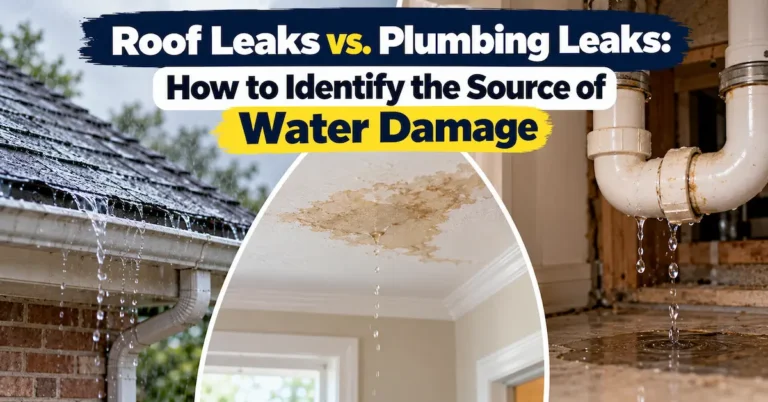
Some roof problems are easier to address when they are identified early. Learn how to spot a roof leak before it becomes a major problem.
Reviews and Reputation
Online reviews are useful, but they’re easier to manipulate than most homeowners realize.
Rather than focusing only on a specific star average or review count, look at the substance of what reviewers describe:
- Did the company communicate clearly?
- Did they show up when scheduled?
- Was the work completed as promised?
- Did they clean up afterward?
- Did they respond when customers had questions?
- Did they stand behind the work afterward?
A pattern of detailed, specific reviews describing similar positive experiences is generally more meaningful than a high volume of short, generic reviews.
It’s also worth asking for references directly, particularly for larger projects like a full roof replacement. A company confident in its work should be able to provide recent local examples you can evaluate.
Warranty and Workmanship Guarantees
Materials typically come with a manufacturer’s warranty, but that’s separate from a workmanship warranty covering the installation itself.
Ask specifically:
- What’s covered?
- How long is it covered?
- Who is responsible for warranty claims?
- What could void the warranty?
- Does the workmanship warranty cover labor required to correct an installation problem?
A roofing company should be able to explain these terms clearly instead of simply telling you that the roof is “under warranty.”
Communication and Follow Through
A surprising number of roofing complaints come down to communication rather than the actual quality of the work.
Before hiring a roofer, consider how the company handles your questions.
Does the company:
- Return calls promptly?
- Explain the proposed work clearly?
- Provide information in writing?
- Explain delays?
- Tell you who will perform the work?
- Provide a clear contact after the project is completed?
These details matter over the life of a roof, especially if something needs to be addressed under warranty later.
Questions to Ask Before Hiring a Roofing Company
Before choosing a roofing contractor in Sugar Land, TX, consider asking:
- Are you insured, and can you provide proof of coverage?
- Can you provide a detailed written estimate?
- Who will actually perform the roofing work?
- What workmanship warranty do you provide?
- Can you provide recent local references?
- How will you document storm or hail damage?
- What happens if additional damage is discovered during the project?
- What is the expected project timeline?
- What materials will you use?
- Who should I contact if there is a problem after the work is completed?
Getting clear answers to these questions can make it easier to compare roofing companies on more than just price.
Red Flags Worth Taking Seriously
A few patterns are worth treating as serious warning signs:
- Demanding full payment upfront before any work begins
- Pressuring you to sign a contract immediately, especially right after a storm
- Offering to waive, absorb, or cover your insurance deductible
- Providing no written estimate or contract
- Being unable to explain insurance coverage
- Making guarantees about insurance claim approval
- Being unable to provide basic business information
- Refusing to explain who will perform the actual work
None of these automatically proves that a contractor is dishonest, but several warning signs appearing together should make you reconsider your options.squalifying in isolation, but more than one appearing together is a strong signal to look elsewhere.
Why Local Roofing Experience Matters in Sugar Land
Choosing a local roofing company in Sugar Land can be useful because roofing conditions in the area are affected by the local climate.
Extended periods of Texas heat can contribute to material aging, while humidity and heavy rainfall can contribute to moisture-related problems. Wind and hail can also cause sudden damage that isn’t always obvious from the ground.
A roofing professional familiar with Sugar Land and Fort Bend County should be able to explain how local weather conditions can affect your roof and why a particular repair or replacement may be recommended.
Local experience doesn’t automatically make one contractor better than another, so homeowners should still verify insurance, references, estimates, warranties, and the actual scope of work.
How Sugar Land Roofing Pros Helps Homeowners
Finding and comparing roofing companies can take time, particularly after a storm when many homeowners are looking for help at the same time.
Sugar Land Roofing Pros is a local referral and connection service that helps homeowners connect with roofing professionals serving Sugar Land and the surrounding Fort Bend County area.
Our role is to help homeowners start the process of finding a suitable local roofing professional rather than presenting ourselves as the crew performing every roofing project.
Homeowners should still ask potential providers about insurance, written estimates, warranties, experience, references, and the exact scope of work before making a hiring decision.
If you’re dealing with an active roofing problem or simply want to understand your options, connecting with a local roofing professional can be a practical next step.
Connect With a Local Roofing Professional
Call Sugar Land Roofing Pros: +1 346-882-0786
The Bottom Line
Choosing the right roofing company in Sugar Land, TX comes down to verifying a handful of concrete things: appropriate insurance coverage, relevant local experience, written estimates, a clear workmanship warranty, good communication, and a track record you can independently evaluate.
Taking the time to check these things before signing anything is far less costly than dealing with poorly performed roofing work later.
If you’re ready to move forward, getting connected with a local roofing professional serving Sugar Land and Fort Bend County can be a practical next step, whether you’re dealing with an active problem or simply want a second opinion before committing to a project.
Connect With a Local Roofing Professional
FAQ
Do I need a licensed roofer in Texas, or is any contractor fine?
Texas doesn’t require a statewide roofing license. Because of this, homeowners should pay particular attention to insurance coverage, business information, local experience, references, and reputation before hiring a roofing contractor.
How many estimates should I get before choosing a roofing company?
Getting at least two or three written estimates is common practice, especially for larger projects like a full replacement. This gives you a basis for comparing price, materials, scope of work, timeline, and warranty coverage.
Is it a bad sign if a company offers to cover my insurance deductible?
Homeowners should be very cautious about any contractor offering to waive, absorb, rebate, or otherwise cover an insurance deductible. Make sure you understand your obligations under your insurance policy and applicable Texas requirements before signing an agreement.
What’s the difference between a manufacturer’s warranty and a workmanship warranty?
A manufacturer’s warranty generally covers qualifying defects in roofing materials, while a workmanship warranty covers issues related to the contractor’s installation. A reputable roofing company should be able to explain both clearly.
How much should I expect to pay for roofing work in Sugar Land?
Costs vary significantly depending on the size and condition of the roof, materials, labor, accessibility, and whether the project involves repair or replacement. The most accurate way to determine the cost is to have the roof professionally assessed and obtain a detailed written estimate.
How do I find a reliable roofer near me in Sugar Land?
Look for a roofing professional who can provide clear business information, appropriate insurance documentation, written estimates, warranty details, relevant local experience, and verifiable references. Avoid contractors who pressure you to make an immediate decision.
What should I look for in a roofing contractor’s estimate?
A good estimate should clearly explain the proposed work, materials, labor, expected timeline, payment terms, warranty information, and how additional work will be handled if unexpected damage is discovered.