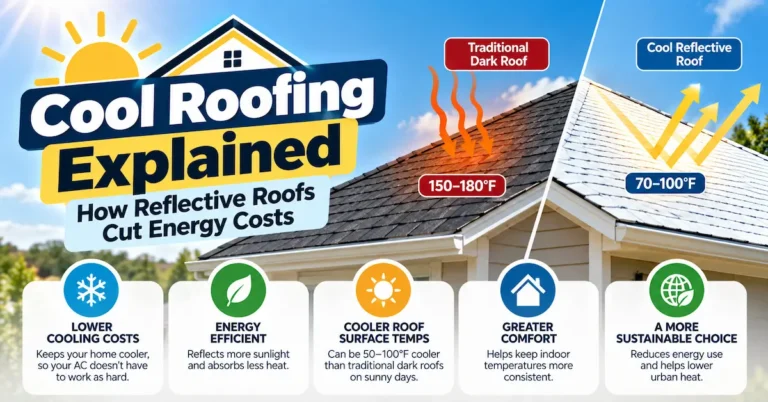
A traditional dark roof can reach surface temperatures well above the surrounding air on a sunny day, and a lot of that heat works its way into the attic and living space below. Cool roofing is designed to interrupt that process. Rather than absorbing solar energy the way a standard dark shingle or membrane does, a cool roof reflects a much larger share of it back into the atmosphere, which keeps the roof surface cooler and reduces how hard a building’s air conditioning has to work.
In a climate with long, intense summers, that difference adds up. Here’s how a cool roof actually works, what qualifies as one, and what kind of energy savings homeowners and building owners can realistically expect.
What Makes a Roof “Cool”
Two properties determine how a roof performs in this respect: solar reflectance and thermal emittance.
Solar reflectance, sometimes called albedo, measures how much incoming sunlight a surface reflects rather than absorbs, expressed as a percentage or a decimal between 0 and 1. A standard dark asphalt shingle roof typically reflects only a small fraction of solar energy, while a cool roof product can reflect a significantly larger share.
Thermal emittance measures how effectively a surface releases absorbed heat rather than holding onto it. A roof with high emittance cools back down more quickly once direct sun exposure decreases.
Together, these two properties are combined into a single number called the Solar Reflectance Index, or SRI, on a scale of 0 to 100, which many building codes and rating systems use as their benchmark for cool roof compliance.
ENERGY STAR and Cool Roof Standards
The ENERGY STAR program sets minimum solar reflectance requirements for roofing products to carry its label. For low-slope roofs, common on commercial and flat residential sections, the current requirement is an initial solar reflectance of at least 0.65, which can degrade to no lower than 0.50 after three years of weathering. For steep-slope roofs, the more typical residential case, the requirement is lower, an initial reflectance of at least 0.25, aged to no less than 0.15.
Some jurisdictions and rating systems go further. California’s Title 24 energy code and LEED certification both commonly reference SRI requirements, often around 78 for low-slope roofs, which is considerably more demanding than the baseline ENERGY STAR threshold.
How Much Can Cool Roofing Actually Save?
Based on research from organizations including the Department of Energy and the Florida Solar Energy Center, cool roofing has generally been shown to reduce cooling energy costs by roughly 10 to 30 percent compared to a standard dark roof, though the exact figure depends heavily on climate, how well the building is insulated, and the specific product used. Buildings with already high insulation levels tend to see a smaller relative benefit, since less heat is transferring through the roof assembly to begin with regardless of surface color.
It’s also worth noting that in climates with significant heating seasons, a highly reflective roof can slightly increase winter heating costs by reflecting away some beneficial solar warmth. In a predominantly cooling dominated climate like Sugar Land’s, this tradeoff is minimal, and the cooling season savings far outweigh any winter effect.
Types of Cool Roof Materials
A cool roof isn’t a single product. It’s a performance category that several different materials can qualify for:
Cool roof coatings, often elastomeric coatings applied over an existing roof surface, are typically the most affordable way to add reflectivity to a roof that wasn’t originally designed to be cool.
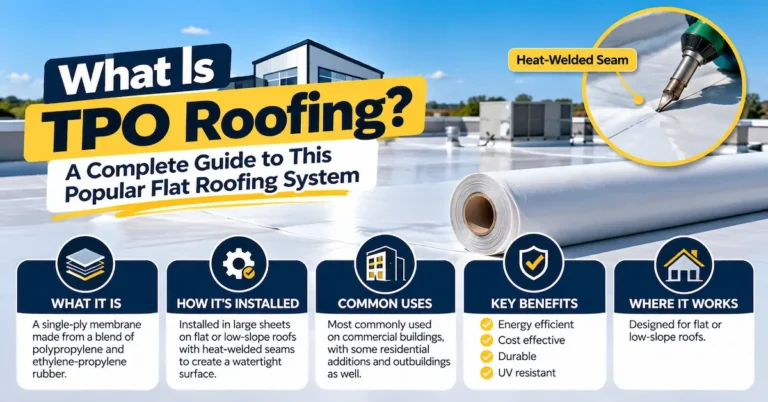
White or light colored TPO and PVC membranes are inherently reflective and are among the most common cool roof choices for flat and low-slope commercial buildings. We cover how TPO performs more broadly in our guide “What Is TPO Roofing? A Complete Guide for Flat Roofs,” including how its reflective surface factors into overall durability and maintenance. (Link once that post’s live URL is confirmed.)
Cool metal roofing uses reflective pigments in its paint finish to meet cool roof criteria while retaining metal’s other durability advantages.
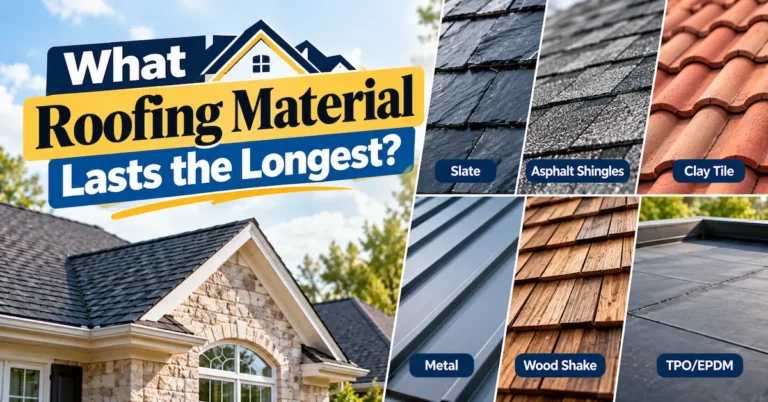
Cool asphalt shingles, a newer category, use infrared reflective granules to achieve meaningfully higher solar reflectance than standard shingles while keeping the familiar shingle appearance, including dark color options that still perform better than traditional dark shingles.
Is a Cool Roof Worth It for a Home in Sugar Land?
For a climate with Sugar Land’s combination of long summers and high cooling demand, a cool roof generally makes practical sense, particularly for flat or low-slope sections common on additions, porches, and commercial buildings. For a typical sloped residential roof, the decision often comes down to balancing the modest additional cost of a cool rated shingle product against expected cooling savings over the roof’s lifespan.
This is a worthwhile factor to weigh at the point of roof replacement, since choosing a cool rated product costs little to nothing extra compared to a standard version of the same material in many cases, while providing a genuine, if moderate, reduction in cooling costs for the life of the roof. We discuss how different roofing materials compare more broadly, including which ones tend to handle heat well, in our guide “What Roofing Material Lasts the Longest? A Full Comparison.” (Link once that post’s live URL is confirmed.)
Maintaining Cool Roofing’s Performance Over Time
Reflectivity isn’t permanent. Dirt, dust, and biological growth such as algae gradually reduce a roof’s solar reflectance over time, which is part of why ENERGY STAR’s standards account for performance after three years of aging rather than only measuring a brand new product. Periodic cleaning, particularly for white membrane roofs, helps maintain the energy efficiency benefit that justified the choice in the first place.
The Bottom Line
Cool roofing works by reflecting solar energy rather than absorbing it, and the resulting reduction in cooling costs, typically in the 10 to 30 percent range, makes it a practical consideration for homes and buildings in hot climates. Whether that translates into choosing a cool rated shingle, a reflective metal finish, or a white membrane for a flat section depends on the specific roof, but the underlying principle holds across all of them: a roof that reflects more of the sun’s energy transfers less heat into the building below.
FAQ
Does cool roofing actually make a noticeable difference inside the house?
Yes, particularly in attics and upper floors directly beneath the roof. The degree of difference depends on insulation levels, roof type, and local climate.
Is a cool roof only for flat or commercial roofs?
No. While white membranes are common on flat commercial roofs, cool rated asphalt shingles and reflective metal finishes bring the same principle to standard sloped residential roofs.
Does a cool roof cost significantly more than a standard roof?
It depends on the material. Cool rated shingles and metal finishes often cost little to nothing more than standard versions, while elastomeric coatings added to an existing roof are a separate cost to budget for.
Can a dark colored roof ever be considered a cool roof?
Yes, to a degree. Some reflective granule technologies allow darker colored shingles to achieve better solar reflectance than traditional dark shingles, even without being as reflective as white products.
How much does a cool roof upgrade typically cost?
Cost depends on the roof’s size, the specific product chosen, and whether it’s part of a new installation or an added coating to an existing roof. The most accurate way to know is to get a quote after a professional assessment.