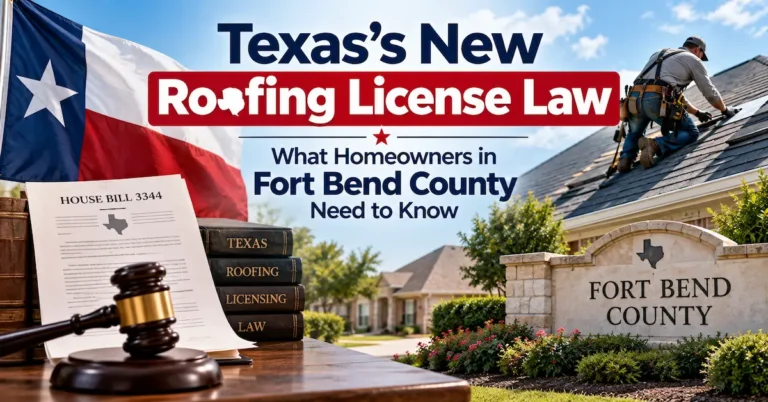
For years, Texas was one of the few states with no state level licensing requirement for roofing contractors, which made “licensed and insured” a phrase that was easy to say and hard to verify. That’s changing. Texas recently created a new state reroofing contractor license through the Texas Department of Licensing and Regulation, with rules finalized in early 2026 and the state beginning to issue licenses in June 2026. Under this law, a contractor cannot advertise as a “licensed reroofing contractor” or use that title unless they actually hold the state issued license.
For homeowners in Fort Bend County, this means verifying a contractor is properly licensed and insured is now more concrete than it used to be, but it also means the transition period can be confusing since older certifications, city registrations, and the new state license are all in play at once. Here’s how to make sense of it and confirm you’re actually hiring a licensed and insured roofer.
What the New State Licensing Law Actually Covers
The law applies to reroofing contractors, defined broadly enough to include repairing, recovering, or replacing existing roof coverings on residential or commercial structures. To obtain the license, a contractor generally has to show proof of business registration and general liability insurance. Licensed contractors are required to include their license number on contracts and advertising, and the state maintains a searchable database so homeowners can confirm a contractor’s status directly rather than taking their word for it.
Because the rollout is still relatively new, it’s worth checking the current status of any contractor directly through the state’s licensing search rather than assuming a company’s marketing claims are accurate, especially during this transition period when standards are shifting from voluntary to mandatory.
Before the State License: What “Insured” Actually Means
Licensing is only part of the picture. Insurance is arguably just as important, and it comes in two main forms:
General liability insurance protects your property if something is damaged during the roofing work, such as a mishap that affects your siding, landscaping, or another part of the home.
Workers’ compensation coverage protects you from liability if a worker is injured on your property. Texas is unusual in that employers can choose not to carry workers’ compensation, so this is worth confirming directly rather than assuming it’s automatically in place.
Ask for a certificate of insurance and confirm it’s current rather than relying on a verbal assurance. A legitimate company should be able to provide this without hesitation.
Local Permits Still Matter
Beyond state licensing, the City of Sugar Land requires a permit for roof repair and roof replacement projects, and this applies regardless of the contractor’s state license status. A reputable roofer working in Fort Bend County should be familiar with this process and should be pulling permits as part of the job rather than treating it as optional. If a contractor suggests skipping the permit process to save time or money, treat that as a warning sign rather than a convenience.
We touched on some of these same evaluation points in our broader guide on what to look for in a roofing company, and licensing and permitting are really the foundation that the rest of that evaluation process builds on.
Watch for Storm Chasers During the Transition
Unlicensed and out of area contractors, sometimes called storm chasers, have historically been a bigger problem in Texas than in states with established licensing systems, since there was previously no state credential to check. The new licensing law was created largely in response to this pattern, but during the current rollout period, some contractors may still be operating under older voluntary credentials or none at all while they work toward compliance.
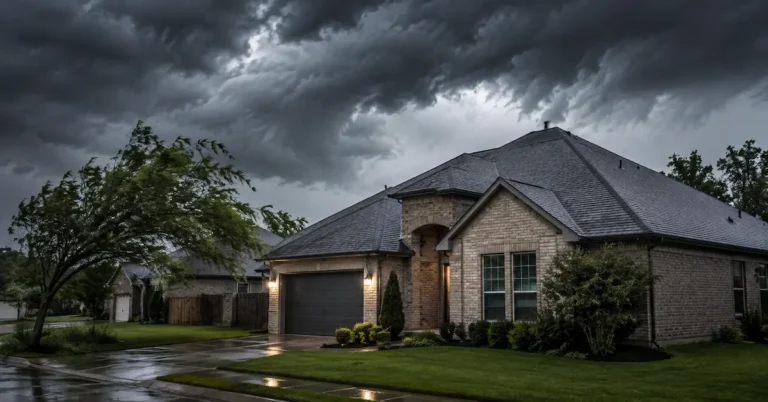
This is especially relevant after severe weather. We’ve written about how storm damage can bring a wave of unfamiliar contractors into an area right after a major event. Confirming licensing and insurance directly, rather than relying on a company’s appearance or a sign in the yard, matters more in these situations, not less.
Questions Worth Asking Before Hiring
A few direct questions can clarify a contractor’s status quickly:
- Do you hold the Texas reroofing contractor license, and can you provide the license number?
- Can you provide a current certificate of general liability insurance?
- Do you carry workers’ compensation coverage, or are you a non-subscriber?
- Will you be pulling the required city permit for this project?
- How long have you been operating specifically in the Fort Bend County area?
A company confident in its standing should answer all of these without hesitation or vague deflection.
Why This Matters More for Larger Projects
For a small, minor repair, the stakes of hiring an unverified contractor are lower. For a full roof replacement or significant storm damage repair, they’re much higher, since the work is more expensive, harder to inspect once finished, and more consequential if something goes wrong. If you’re weighing whether a project needs a full roof replacement rather than a smaller repair, that’s exactly the kind of decision where verified licensing and insurance matter most, since it’s a larger financial commitment with more room for something to go wrong if the contractor isn’t properly credentialed.
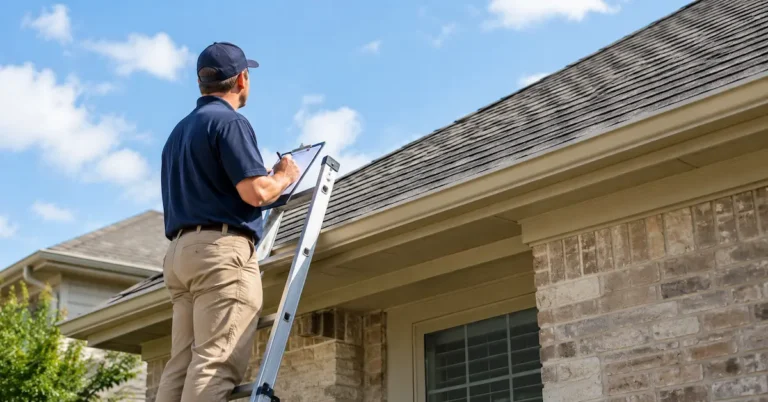
Starting with a documented roof inspection from a verified professional gives you an independent record of the roof’s condition before larger work begins, which is useful both for comparing contractor estimates and for confirming the scope of work actually matches what your roof needs.
The Bottom Line
Hiring a licensed and insured roofer in Fort Bend County now involves more moving pieces than it used to, between the new state reroofing license, standard liability and workers’ compensation insurance, and local city permitting. The upside is that homeowners now have more concrete ways to verify a contractor’s standing than the “just take their word for it” approach that used to be the norm in Texas. Taking the time to confirm each piece directly, rather than assuming a company’s advertising is accurate, is the clearest way to avoid the kind of contractor problems this new law was specifically created to address.
FAQ
Is Texas’s new roofing license mandatory for all roofing work?
The law applies to reroofing contractors, covering repairing, recovering, or replacing existing roof coverings. Since the licensing system is still in its early rollout, it’s worth confirming a specific contractor’s current status directly through the state’s licensing search.
How do I check if a roofer is actually licensed?
The state maintains a searchable database of licensed reroofing contractors. Asking directly for a contractor’s license number and confirming it independently is more reliable than relying on marketing claims alone.
Does having insurance protect me if the roofer gets hurt on my property?
Workers’ compensation coverage is what typically protects you in that situation. Since Texas allows employers to opt out of workers’ compensation, it’s worth confirming a contractor actually carries it rather than assuming.
Do I still need a permit if my contractor is licensed?
Yes. The City of Sugar Land requires permits for roof repair and replacement projects regardless of the contractor’s state licensing status. These are separate requirements that both need to be satisfied.
What should I do if a contractor pressures me to skip permits or licensing checks?
Treat that as a significant warning sign. A reputable, properly credentialed contractor has no reason to avoid permits or licensing verification.